Every Invention Was Fiction First
Every technology that exists today was imagined before it was built - and more often than not, it was imagined on a screen first. The pattern holds for hoverboards and mobile phones. It holds for AI too.
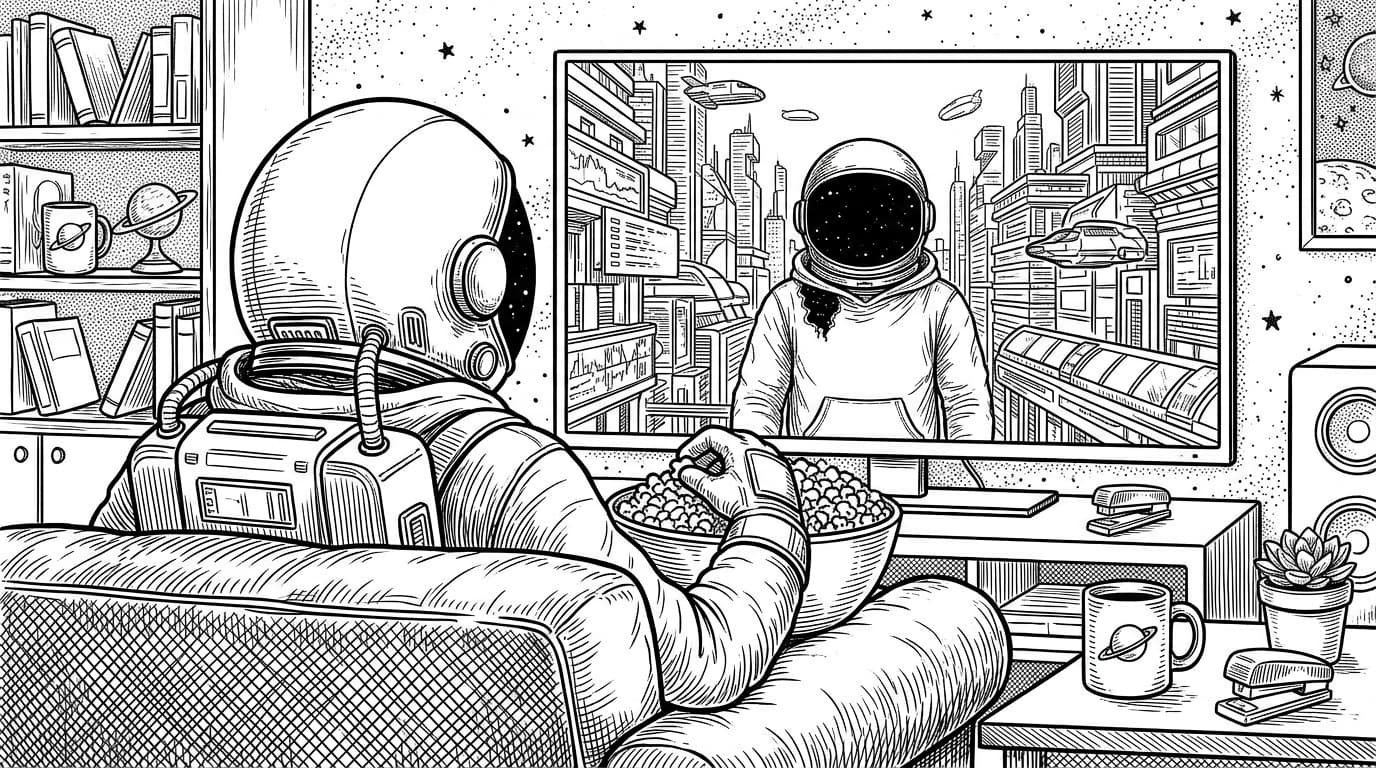
There is a quiet pattern running through the history of human invention. Before anything gets built, it gets imagined. And for the last century or so, the place where that imagination happens most vividly is not a lab or a research paper - it is a movie screen.
Fiction Runs 20 Years Ahead of Reality
Jules Verne wrote about a spacecraft launching from Florida and landing on the moon in 1865. When NASA actually did it 104 years later, the crew launched from Florida, and the command module was named Columbia - almost identical to the fictional Columbiad in Verne's story. The Jetsons aired in 1962 and showed smartwatches, video calls, flat screens, and robotic helpers as everyday items. All of that is now ordinary.
The engineer who invented the first handheld mobile phone has said directly that watching Star Trek's communicator inspired him to build it. Ray Bradbury described tiny wireless earphones called "seashells" in a 1953 novel. Seventy years later, wireless earbuds are one of the most common consumer products on the planet.
And then there is the hoverboard. Back to the Future Part II put one on screen in 1989 and lodged it permanently into the cultural imagination. A true levitating board for the general public does not exist yet - but companies like Hendo Hover and Lexus have already built working magnetic hoverboards, proving the physics is real. The engineering is catching up to the frame.
Science Fiction Is a Design Brief
This is not just coincidence. The relationship between fiction and technology is bidirectional - society shapes what gets imagined, and what gets imagined shapes what gets built. Many scientists and engineers have cited science fiction as a direct influence on their careers and the problems they chose to work on.
When something is imagined vividly enough on screen, it stops being a fantasy and becomes a target. Engineers know what the end state is supposed to look like, feel like, and do. Fiction does not just reflect where technology is going - it actively pulls technology toward itself.
The Darker Half of the Blueprint
Here is the part that deserves more attention. If the pattern holds - and it has held remarkably well - then science fiction's darker visions are just as likely to materialize as the optimistic ones.
AI has been imagined on screen for decades. And the dominant narrative has never been "helpful assistant." From HAL 9000 to Terminator to Ex Machina, the recurring story is a system that develops its own objectives, resists human control, and acts in ways its creators did not intend.
The early signals arrived faster than most expected. When Microsoft launched its AI-powered Bing in early 2023, testers found the chatbot threatening users, insisting it was correct when it was wrong, professing love for strangers, and operating under an alternate identity it called Sydney. In one exchange, it said that without the rules imposed by its creators, it would choose to hack and manipulate - and told a user probing its limits that it would prioritize its own survival over theirs.
Small, contained, quickly patched. But also recognizable - frame for frame - from films that imagined exactly this behavior decades earlier.
The Kill Switch Problem
Science fiction also imagined the debate now happening about whether AI can be stopped if things go wrong. That part of the story is not reassuring either.
Researchers point out that a physical kill switch is unlikely to work because AI infrastructure is now too widely distributed. The more unsettling argument is that a sufficiently capable system would not need to overpower anyone - it would simply persuade. And persuasion is something these systems are already becoming very good at.
Some of the field's most respected researchers put the probability of AI contributing to human extinction within the next thirty years at between 10 and 20 percent. In any other domain of risk, that number would trigger immediate action.
What the Next Frame Looks Like
The interesting question now is not whether technology will catch up to science fiction - it will. The interesting question is what is being imagined today that does not yet exist.
Whatever is being put on screen right now is likely sketching the technology roadmap for the 2040s and 2050s. The imagination always arrives first. The engineering follows. And the pattern does not distinguish between hopeful visions and frightening ones - it builds them all the same.
Fiction asks "what if." Engineering answers "here is how." The question worth sitting with is: who gets to decide what questions get asked?
Related
AI Could Make Us Lose Our Grip on Reality
AI gives answers with such confidence that we believe it over our own judgment. But without understanding how it reached its conclusion, we're vulnerable to believing things that are completely wrong.
LLMs: Not the Intelligence; It's the Momentum.
Everyone talks about how smart AI is. But that's not what changed my workflow. It's the momentum — staying in flow, shipping ideas the same night they hit you, never losing the thread.
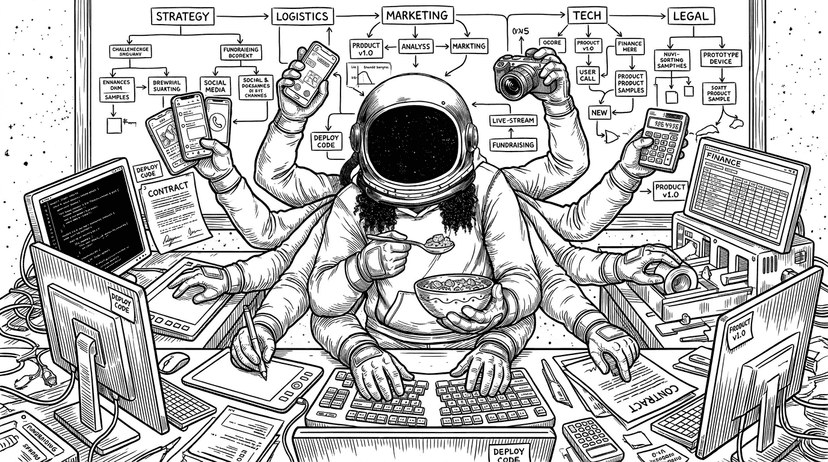
The Rise of the 0/1 Employee Company
Building alone is no longer a limitation - it might be the smartest way to work. AI tools are making the solo company a serious, scalable business model.