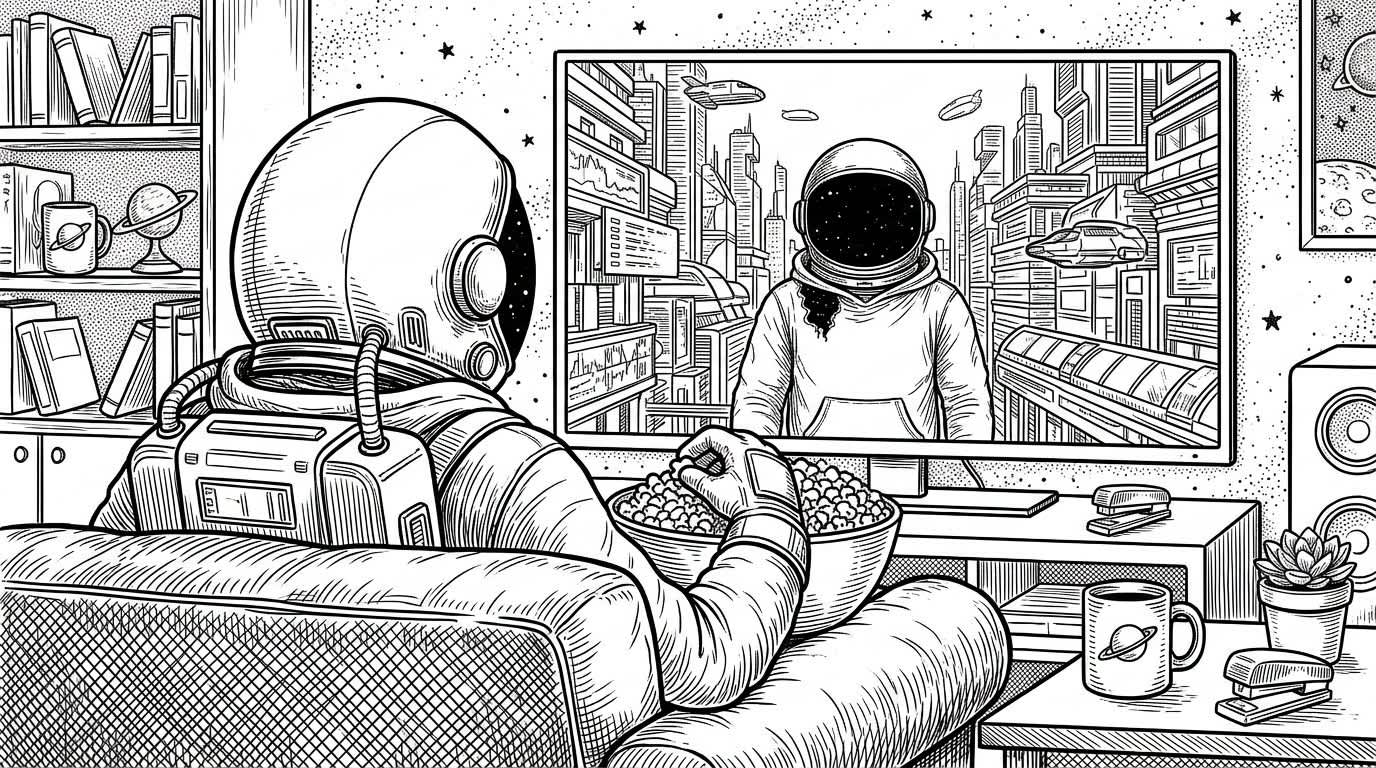
AI gives answers with such confidence that we believe it over our own judgment. But without understanding how it reached its conclusion, we're vulnerable to believing things that are completely wrong.
Published
Read time5 min
TopicAI, Technology
TypeEssay
SeriesThoughts
Why We Trust AI More Than Reality
Last week, my friend showed me a photo of a celebrity at a public event. I barely noticed something was off until she told me it was AI-generated. My first reaction? "No way, it looks so real." My second thought made me uncomfortable: How many photos have I already believed were real without question?
This is the problem we're not talking about enough. AI doesn't just give us answers. It gives us answers with absolute certainty. And we believe it.
The Black Box We're Living Inside
What troubles me about AI is that I can't see its reasoning. If I ask you why you think someone makes a good leader, you can explain. You'll talk about their honesty, their track record, maybe their ability to listen. You might be wrong, but at least I understand where you're coming from.
Ask an AI to predict something, and it will give you an answer with impressive confidence. But ask it why, and you get a post-hoc explanation that feels like someone reverse-engineering a conclusion rather than actually showing their work. The AI doesn't think the way humans think. It's recognizing patterns in data so complex that even the engineers who built it can't fully explain what's happening inside.
This matters because without transparency, we can't verify if the answer is actually right. When a doctor diagnoses you, you can ask for a second opinion. When an AI system makes a decision about your loan application or your child's school placement, can you really challenge it? Do you even understand what variables it weighted? Most of the time, no.
The Confidence Trap
What makes it worse is that AI is actually good. Really good. In many cases, better than humans.
So we start trusting it more than we trust ourselves. And logically, that makes sense, right? If something is consistently more accurate, why wouldn't you believe it?
But this is where human psychology plays a dangerous trick on us. We confuse accuracy with trustworthiness. They're not the same thing. I can be really good at my job and still be wrong sometimes. What makes me trustworthy is that when I'm wrong, you can understand why, and I can explain how to avoid making that mistake again.
AI doesn't have that luxury. It can't tell you the "why" in a way humans can understand. So when it's wrong (and it will be wrong) there's no mechanism for us to catch it, question it, or learn from it. We just keep believing.
The Real World Is Already Broken
This isn't theoretical. It's already here.
Look at the explosion of AI-generated images and deepfakes. I see a video of a politician saying something controversial, and my first instinct is doubt. But for many people, especially those who encounter these things on social media without context, the first instinct is belief. The image looks real. The video sounds real. The AI didn't say "this is probably real." It was generated with enough polish to be indistinguishable from genuine content.
And here's the scary part: by the time you realize it's fake, the damage is done. Millions of people have already shared it. The original truth becomes less viral than the spectacular lie.
We're also seeing this in smaller, more insidious ways. AI tools give confident-sounding answers on medical forums. People believe them over their doctor. AI creates news headlines and summaries that distort the original story. AI recommends products and services with such polish that we forget it's optimizing for clicks, not our actual needs.
Every time we choose to believe the AI without question, without verification, without human judgment, we're strengthening the cycle.
The Design Problem We're Ignoring
I think about this as a design problem because it is one. We've designed systems that remove humans from the decision-making loop, not because it's better for people, but because it's faster and cheaper for business. We've created interfaces so sleek, so confident, so certain that they bypass our critical thinking entirely.
The real question isn't "how do we make AI more intelligent?" The question is "how do we design AI systems that don't erode human judgment?"
This might mean slower interfaces. Less certain answers. More friction. More moments where the system says, "I'm not sure" or "here's where I could be wrong" or "talk to a human about this." These feel like failures in our optimization-obsessed world. But they might actually be the difference between a tool that serves us and a tool that controls us.
What Do We Do?
The honest answer is: be skeptical. Not cynical, but skeptical. When you encounter information that seems really neat, really polished, really certain, especially when it's consequential, ask yourself: Is this real? Do I understand how this conclusion was reached? Would a human agree?
For important decisions, about your health, your finances, your safety, take help from AI but default to human expertise before you finalise. AI is useful for augmentation, for pointing you in a direction, for giving you options to consider. But the final decision, the judgment call, should be yours.
And if you're building with AI, design for transparency. Show your work. Admit uncertainty. Give people the hooks they need to question you. Make it easy to say, "Wait, explain that again."
We can use AI responsibly. But only if we remember that confidence isn't the same as correctness, and that believing something just because it sounds sure is how reality itself becomes a matter of opinion.