Every invention was once fiction
Every technology that exists today was imagined before it was built, and more often than not, it was imagined on a screen first.
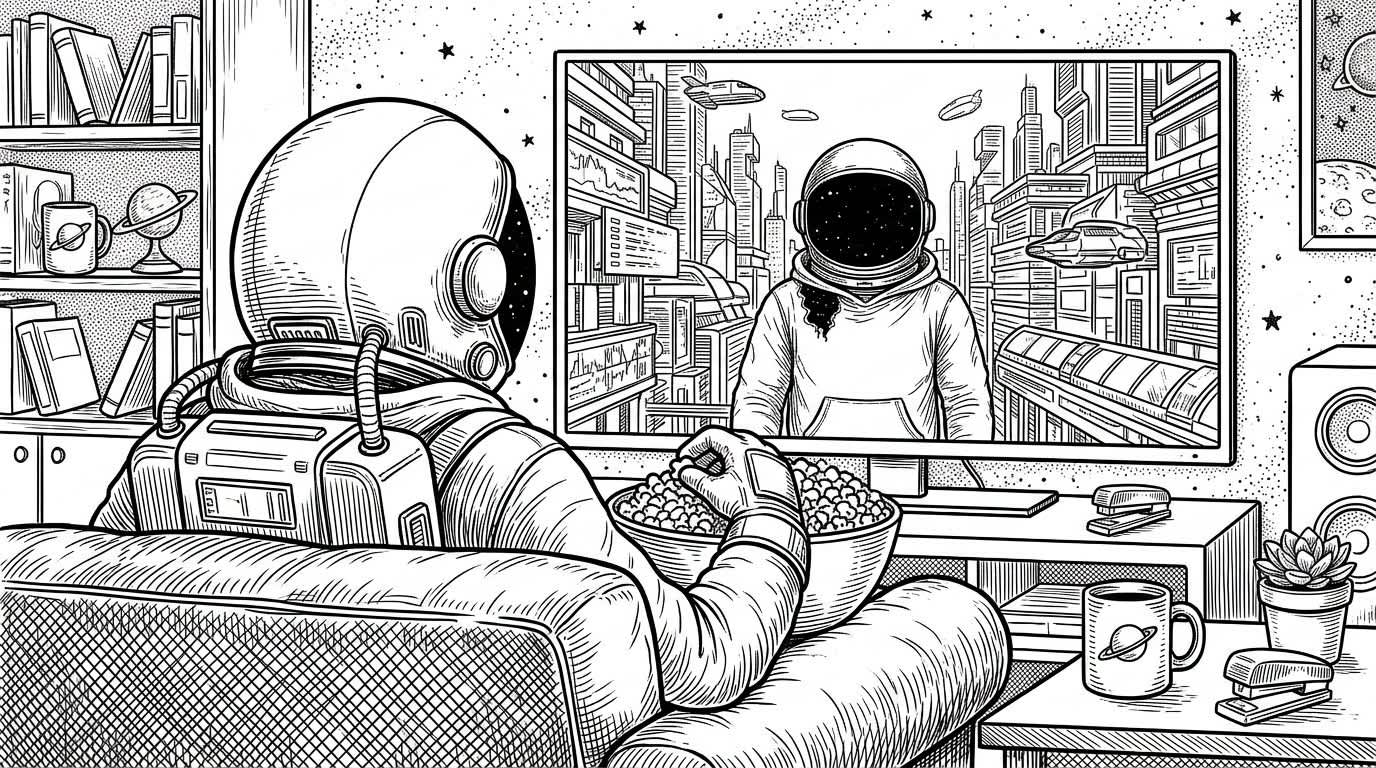
There's a quiet pattern running through the history of human invention. Before anything gets built, it gets imagined. And for the last century or so, the place where that imagination happens most vividly isn't a lab or a research paper. It's a movie screen.
Fiction Runs 20 Years Ahead of Reality
Jules Verne wrote about a spacecraft launching from Florida and landing on the moon in 1865. When NASA actually did it 104 years later, the crew launched from Florida. The Jetsons aired in 1962 and showed smartwatches, video calls, flat screens, and robotic helpers as everyday items. All of that is now ordinary.
The engineer who invented the first handheld mobile phone said that watching Star Trek's communicator inspired him to build it. Ray Bradbury described tiny wireless earphones called "seashells" in a 1953 novel, and 70 years later, wireless earbuds are one of the most common consumer products on the planet.
And then there's the hoverboard from "Back to the Future Part II." A true levitating board for the general public doesn't exist yet, but companies like Hendo Hover and Lexus have already built working magnetic hoverboards, proving the physics is real. The engineering is catching up.
Science Fiction Is a Design Brief
This isn't just coincidence. The relationship between fiction and technology is bidirectional. Society shapes what gets imagined, and what gets imagined shapes what gets built. Many scientists and engineers cite science fiction as a direct influence on their careers and the problems they chose to work on.
When something is imagined vividly enough on screen, it stops being a fantasy and becomes a target. Engineers know what the end state is supposed to look like, feel like, and do. Fiction doesn't just reflect where technology is going, it actively pulls technology toward itself.
The Darker Half of the Blueprint
Related

AI Could Make Us Lose Our Grip on Reality
AI gives answers with such confidence that we believe it over our own judgment. But without understanding how it reached its conclusion, we're vulnerable to believing things that are completely wrong.

LLMs: Not the Intelligence; It's the Momentum.
Everyone talks about how smart AI is. But that's not what changed my workflow. It's the momentum, staying in flow, shipping ideas the same night they hit you, never losing the thread.